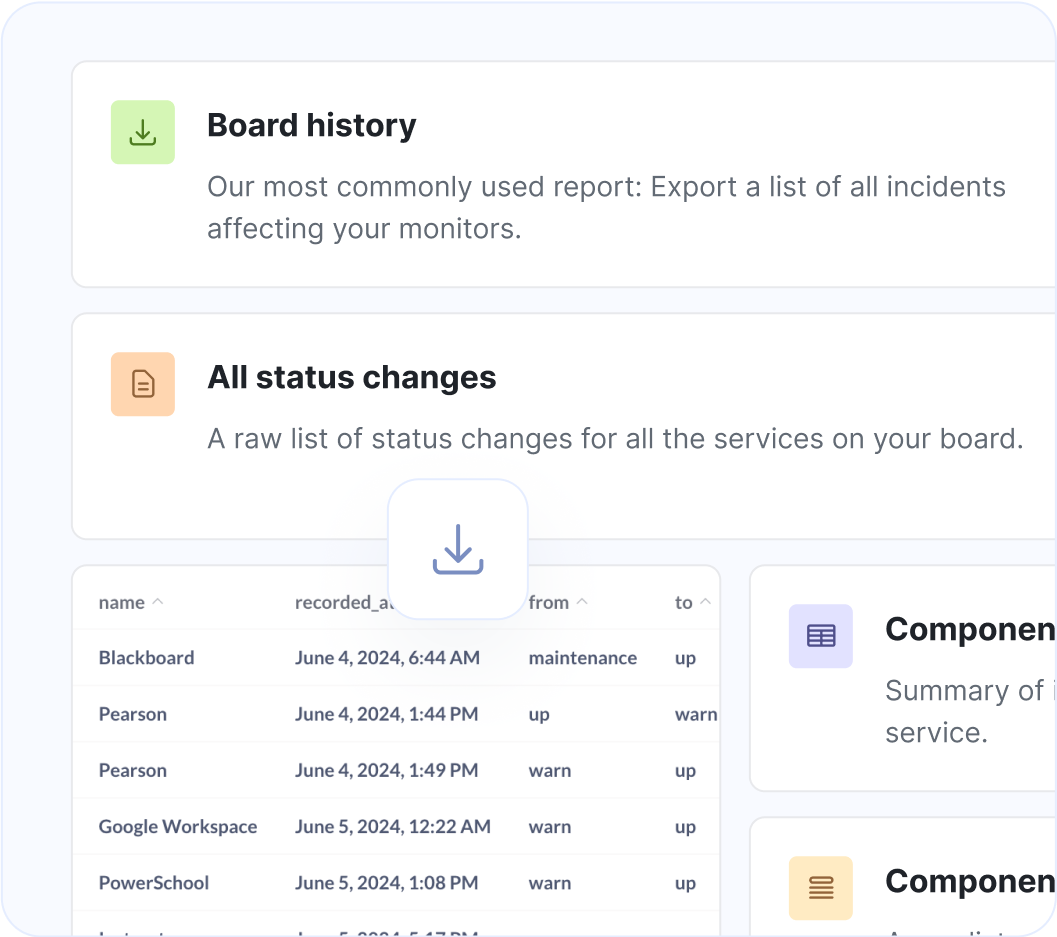
What Is a Status Aggregator?

A centralized platform for monitoring outages and incidents across all your cloud vendors.

A status aggregator collects status pages, incident updates, and outage signals from multiple providers into one dashboard, so teams can see external service health without checking dozens of separate pages. StatusGator is built to do this at scale across cloud services, SaaS tools, APIs, and other dependencies.
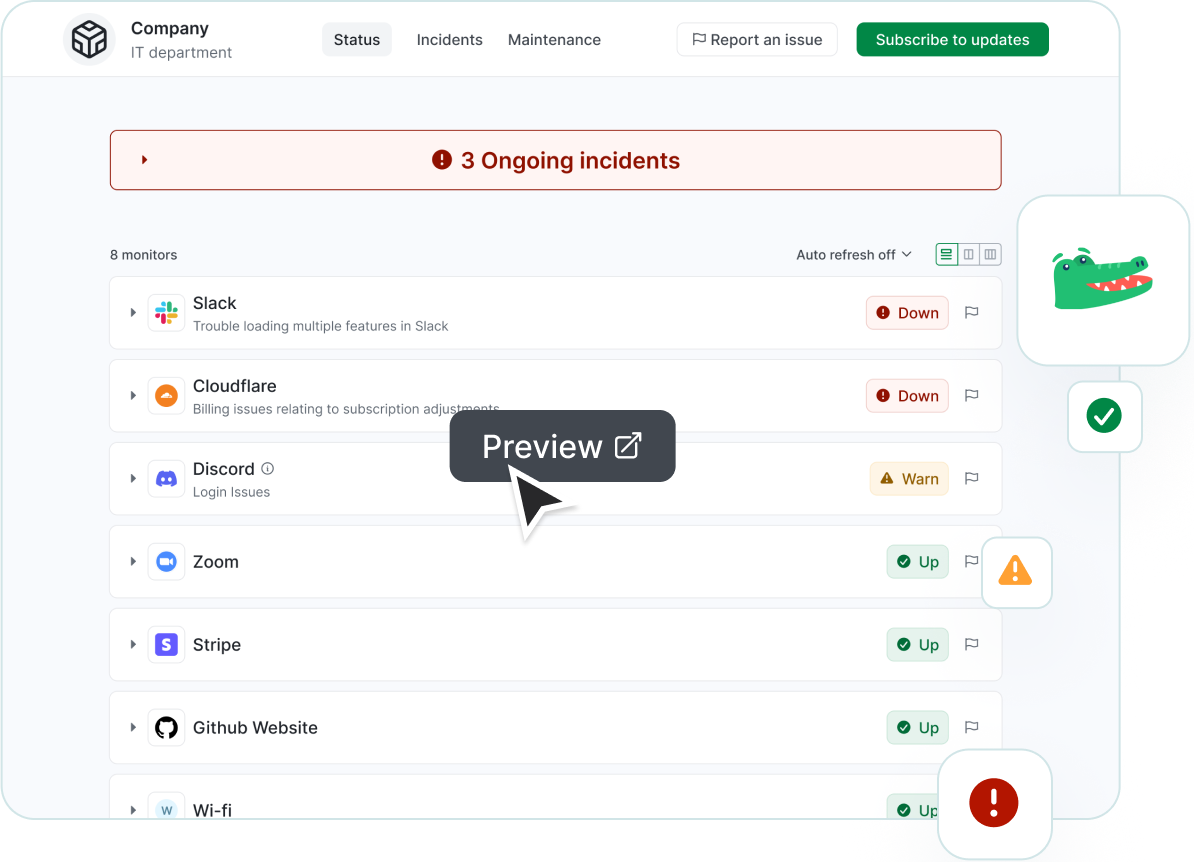
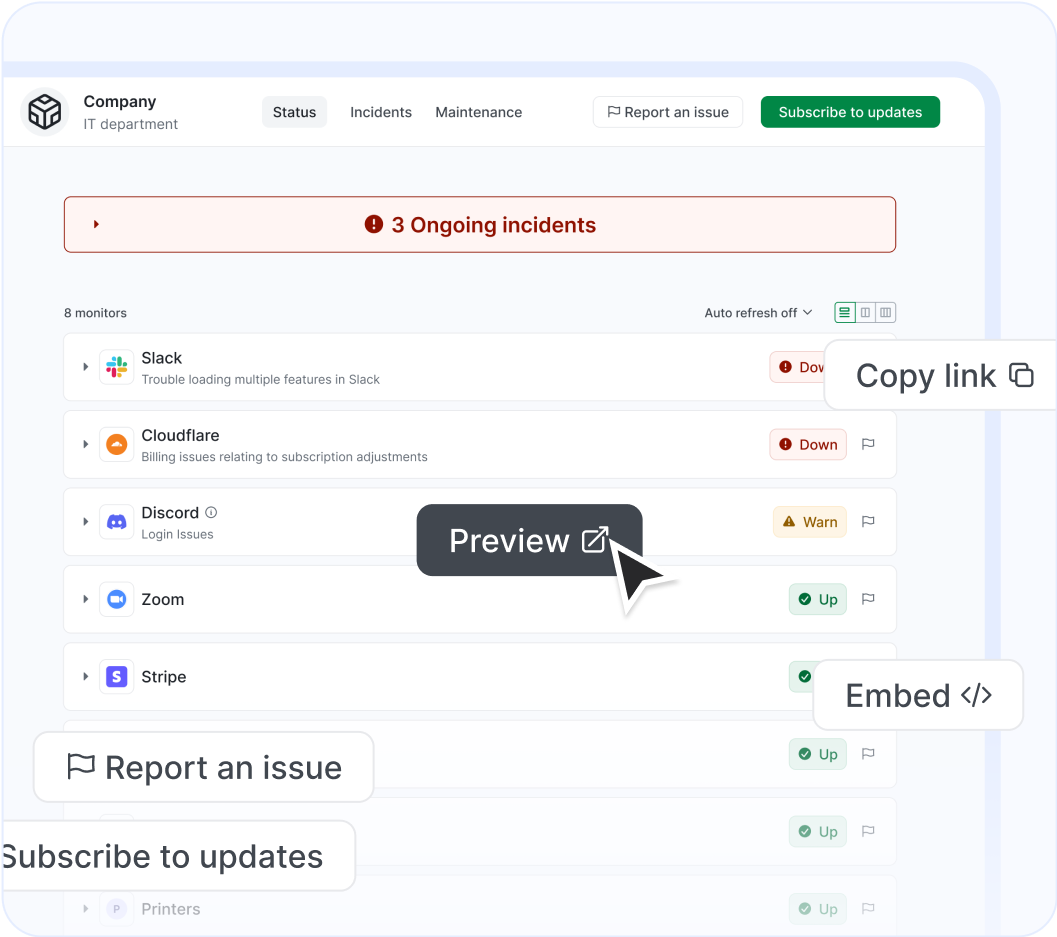
StatusGator aggregator dashboard

Watch: What is a Status Page Aggregator?

Status page aggregation centralizes vendor status data so teams can monitor outages, maintenance, and incident updates from one place. The video is a helpful visual introduction for teams who want to understand the category before comparing tools.

How status aggregators work

Status aggregator page

Status aggregators use a combination of APIs, scraping, normalization, alerting, filtering, and dashboards to bring many status sources into one place. Some providers expose structured APIs, while others require HTML scraping or undocumented endpoints, and the aggregator normalizes the different status terms into a unified view.

  • APIs pull incident and maintenance data where available.
  • Scraping fills in gaps when providers do not offer a clean API.
  • Normalization turns different vendor status terms into consistent categories.
  • Alerting pushes incident changes to Slack, Teams, email, SMS, webhooks, and other workflows.
  • Filtering lets teams focus on the services and components they care about.
  • Dashboards show all dependencies in one operational view.

Why use status aggregator

List of third-party status monitoring

A status aggregator reduces the number of tabs and vendor pages your team needs to check during an incident. It also improves operational awareness by making dependency health visible in one place, which helps support, engineering, and incident response teams move faster.

Fewer tabs during incidents.
Centralized alerts.
Better dependency visibility.
Faster incident triage.
Shared operational awareness across teams.

Why StatusGator is No.1 status aggregator

See every outage with StatusGator

StatusGator is a strong status aggregator because it combines status aggregation, outage monitoring, early warning signals, private status ingestion, and historical incident context. That makes it especially useful for teams that need more than a simple status page viewer and want a true operational layer for external dependencies.

"StatusGator is built for cloud vendors, SaaS tools, and APIs, and it is designed to show status changes in a normalized, searchable format that teams can actually act on."

Status aggregator vs other monitoring tools

Category What it does How it differs
Status aggregator Collects external vendor status pages and outage signals into one dashboard. Best for dependency visibility and incident awareness.
Uptime monitor Checks your own services and endpoints for availability. Focuses on your infrastructure, not vendor status pages.
Observability tool Tracks metrics, logs, traces, and app behavior. Strong for debugging your systems, not aggregating vendor incident pages.
Infrastructure monitoring Monitors servers, networks, and internal systems. Centers on infrastructure health, not external SaaS dependencies.
Status pages Publish your own incident updates to users. Communicate your status, not monitor third-party vendors.

The cleanest way to explain the category is this: observability tells you what is happening inside your stack, while status aggregation tells you what is happening outside it.

What status aggregation looks like in practice

Claude outage

April 9, 2026

StatusGator detected the issue 59 minutes before official acknowledgment.

Early Warning Signals helped teams confirm the issue was upstream, not internal.

Read case study

Include one featured incident story near this section, such as the Bitbucket outage case, to make the category feel tangible. A real example helps visitors understand that aggregation is not just a convenience feature. It can surface vendor incidents earlier than manual checking.

What makes the best status aggregators?

Tips on choosing status aggregator

The best status aggregators are accurate, broad in coverage, fast at detecting change, and easy to use during incidents. They should normalize statuses cleanly, support alerts in the team’s workflow, and make it easy to filter or search the services that matter most.

  • Broad vendor coverage. Monitor thousands of cloud services out of the box without manual configuration.
  • Reliable data normalization. Translate confusing vendor status jargon into a unified, easy-to-understand format.
  • Fast alerting. Get notified immediately where your team works (Slack, Teams, Email, SMS).
  • Strong filtering and search. Focus only on the specific components and regions that impact your infrastructure.
  • Historical incident context. Access past incident data to identify patterns and unreliable vendors.
  • Easy team adoption. Simple dashboards that require zero training for support and engineering teams.

Frequently asked questions

A status aggregator is a tool that collects status pages and incident updates from multiple providers into one dashboard.
A status page publishes your own service updates, while a status aggregator monitors external vendors and dependencies.
Uptime monitoring checks your own infrastructure, while a status aggregator monitors the services you rely on outside your own stack.
To reduce tab-switching, centralize alerts, improve dependency visibility, and respond faster when vendors have issues.
The best option is the one with broad coverage, fast alerts, strong normalization, and the right integrations for your team. StatusGator is designed around those needs.

Start monitoring thousands of services from one dashboard

Monitor outages, incidents, and maintenance from a single place with a status aggregator built for cloud vendors and SaaS dependencies.